

Correcting CT Scanner Streak Artifacts
 James Porchik: April 12, 2024
People refer to interventional equipment inspections frequently in our industry but seldom identify what a thorough inspection looks like. To pull back the curtain on the process, we’ve compiled the major steps our engineering team takes when they conduct an inspection of a cath lab. There are quite a number of other steps in our 4-5 hour process as well but, in the essence of time, we’ll focus on the larger elements.
The saying, "A picture is worth a thousand words" holds true here. One picture of a complete system can tell us the mounting type, table type, number of monitors, types of tableside controls, and detector size, among other things. As our engineers move through the testing and inventory of the system, everything is documented with a full set of photos
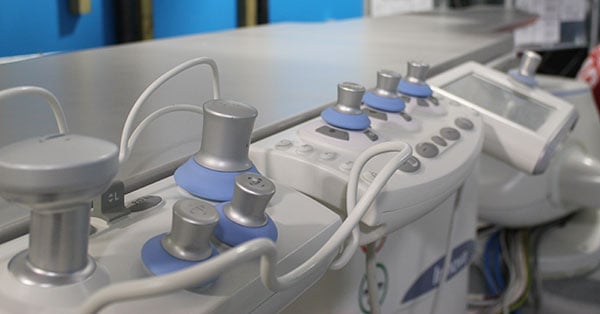
Cath labs are the largest imaging modality in terms of the number of components and accessories included with them. An inventory of the system is completed with photos as mentioned above. Pictures document everything from cabinets, tableside controls, and operator consoles to software disks, manuals, and phantoms.
From the console, an engineer will review past or current recurring issues. Noting recurring issues is significant in illuminating potentially failing components or problem areas in a system’s mechanics or electronics.
The digital detector is the most expensive and among the most sensitive components of a cath lab system. To evaluate its condition, our engineers run various quality tests. Lines or shading in the image, while concerning, could possibly be calibrated out of the detector by the servicing FSE, or could even be caused by other components of the system. Additional troubleshooting would be required to ensure the system has a good detector, suitable for reinstallation and clinical use.
While this may seem like common sense, it’s a key difference between a thorough inspection and a superficial one. A professional inspection puts the machine through all of the mechanical paces, taking each articulated piece through its entire range of motion: tables, monitor booms, footswitches, C-arms, positioners, etc. It's important to move beyond the most commonly used positions to confirm a full range of motion.
Our engineers use the manufacturer’s QA phantom to test image quality and take static shots as well as CINE runs that simulate a patient case. Using these phantoms indicates if the imaging is up to OEM standards and provides a baseline going forward.
For any potential buyer of a cath lab system, a detailed inspection is a crucial step before money changes hands. While it is possible to handle some of these items on your own, we believe the finer, more technical points of the inspection are best left to qualified professionals that understand interventional labs inside and out.
If you're in the market for a system and would like a professional inspection, our team is ready to help. Give us a call or use the button below to get in touch about scheduling a field engineer.